Category: Emulsifier Comparisons
Insights on food emulsifiers—applications, functions, and benefits to improve stability, texture, and quality across industries.
Browse by Topics
Emulsifier Comparisons: Optimizing Stability and Performance in Food Formulations
In the dynamic world of food science, emulsifiers are the unsung heroes that ensure product stability, texture, and shelf life, from creamy sauces to airy baked goods. The \”Emulsifier Comparisons\” category serves as an essential resource for formulators and manufacturers navigating the complexities of selecting the right non-ionic surfactants. By dissecting key differences in chemical structures, HLB values, and application-specific performance, these guides empower you to make informed decisions that balance efficacy, cost, and clean label demands without compromising quality.
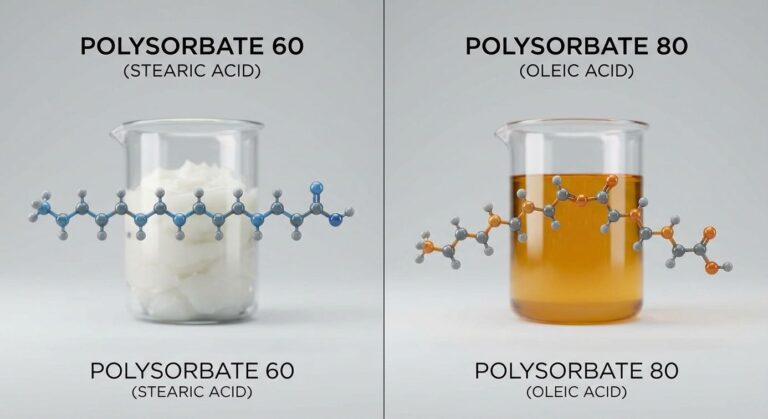
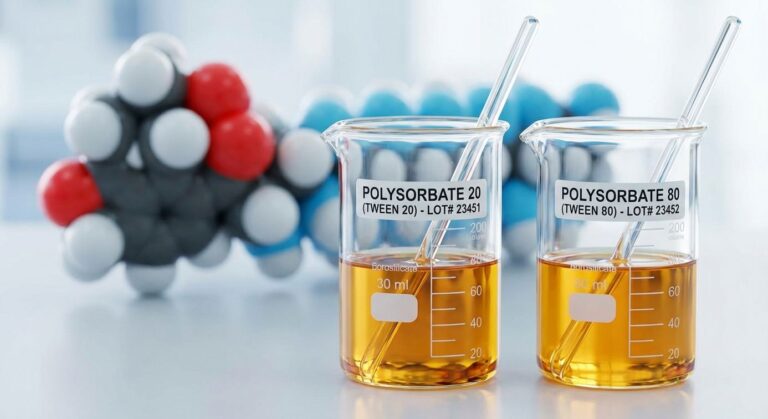
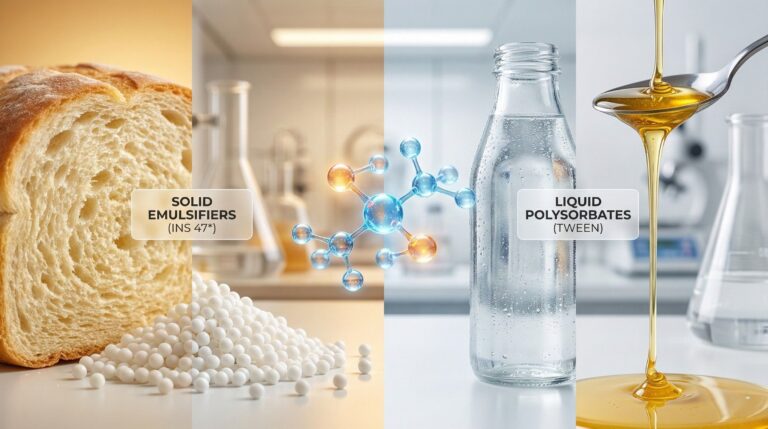
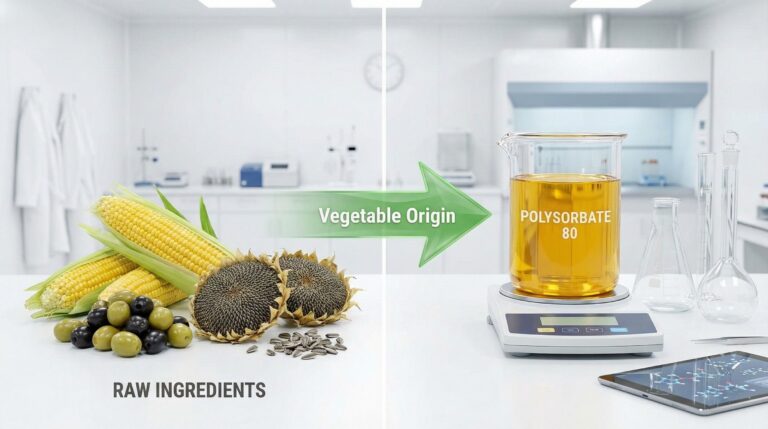
Delve into the nuances of popular emulsifiers like Polysorbate 60 and Polysorbate 80, where HLB values (14.9 vs. 15.0) dictate emulsification strength for oil-in-water (O/W) systems in beverages and ice creams, versus water-in-oil (W/O) setups in margarines. Explore sorbitan esters (Spans) versus polysorbates (Tweens), highlighting their synergistic blends—such as Span 60 (HLB 4.7) with Tween 60 for enhanced aeration in whipped toppings or bakery dough conditioning. Natural substitutes for Polysorbate 60, including lecithin for clean label chocolates or DATEM for bread volume, address supply chain challenges and consumer preferences, while comparisons with INS 47x series (mono- and diglycerides) reveal limitations in solubility for liquid formulations like sauces. From Span 80’s role in confectionery anti-blooming to vegetable-based Polysorbate 80 for ethical stability in pharmaceuticals and personal care, these analyses underscore how matching HLB to oil phases prevents separation, improves mouthfeel, and optimizes industrial scalability.
Whether tackling high-shear needs or natural alternatives like sucrose esters, these insights help food manufacturers streamline R&D, reduce formulation failures, and innovate with confidence. Explore the detailed guides below to master emulsifier selection for your next breakthrough product.